Analytics of Card Probabilities Enabling Live Adjustments in Football Betting on Integrated Platforms
Bianca Müller · Aug 18, 2026
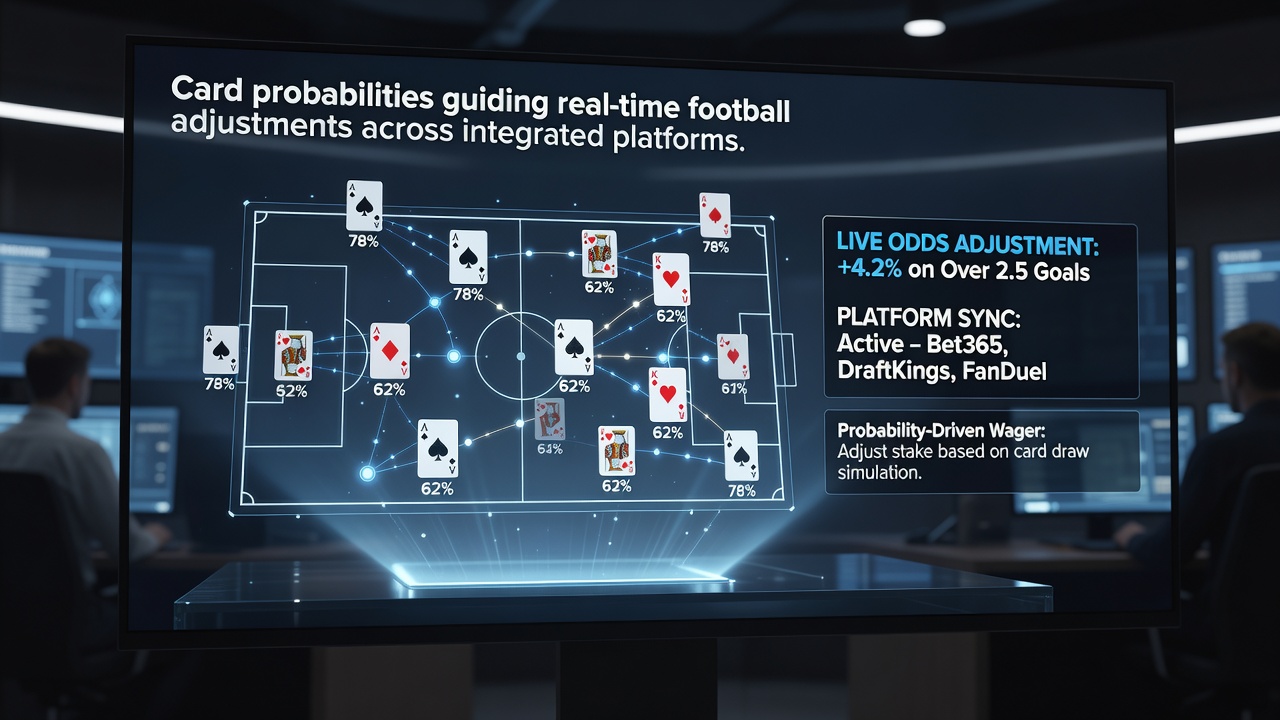
Analytics of Card Probabilities Enabling Live Adjustments in Football Betting on Integrated Platforms
Integrated betting platforms now rely on card probability models to recalibrate football wagers during matches, with algorithms processing variables such as referee history, team disciplinary records, and current game state to update odds within seconds of each event. These systems draw from extensive datasets that track yellow and red card occurrences across major leagues, allowing operators to adjust lines on markets including total cards, player-specific bookings, and time-banded card totals while the ball remains in play.
Core Components of Card Probability Models
Researchers at institutions like the University of Nevada, Las Vegas Center for Gaming Research have documented how multivariate regression techniques combine historical league data with in-match inputs to generate dynamic probabilities. Variables include average cards per game for each side, referee card issuance rates, player positions most likely to incur sanctions, and contextual factors such as scoreline and remaining time. When a match enters stoppage time or a player receives an early booking, the platform recalculates the likelihood of additional cards and immediately revises associated wager prices across connected terminals and mobile applications.
Operators integrate these models into unified back-end engines that serve both pre-match and in-play products, ensuring consistency when users switch between desktop interfaces and live-streaming environments. Data feeds from official match statisticians update the models continuously, and the resulting probabilities feed directly into pricing engines that apply micro-adjustments without manual intervention.
Real-Time Wager Adjustment Mechanisms
Once a match begins, the platform monitors events through automated APIs that flag card incidents within milliseconds. The model then reweights remaining card probabilities based on updated conditions, such as a reduced player count after a red card or an increase in physical challenges following a goal. Bettors see these shifts reflected in live odds for markets like over 3.5 cards or next player booked, with the system distributing the revised figures simultaneously across all integrated channels.
Cross-Platform Synchronization
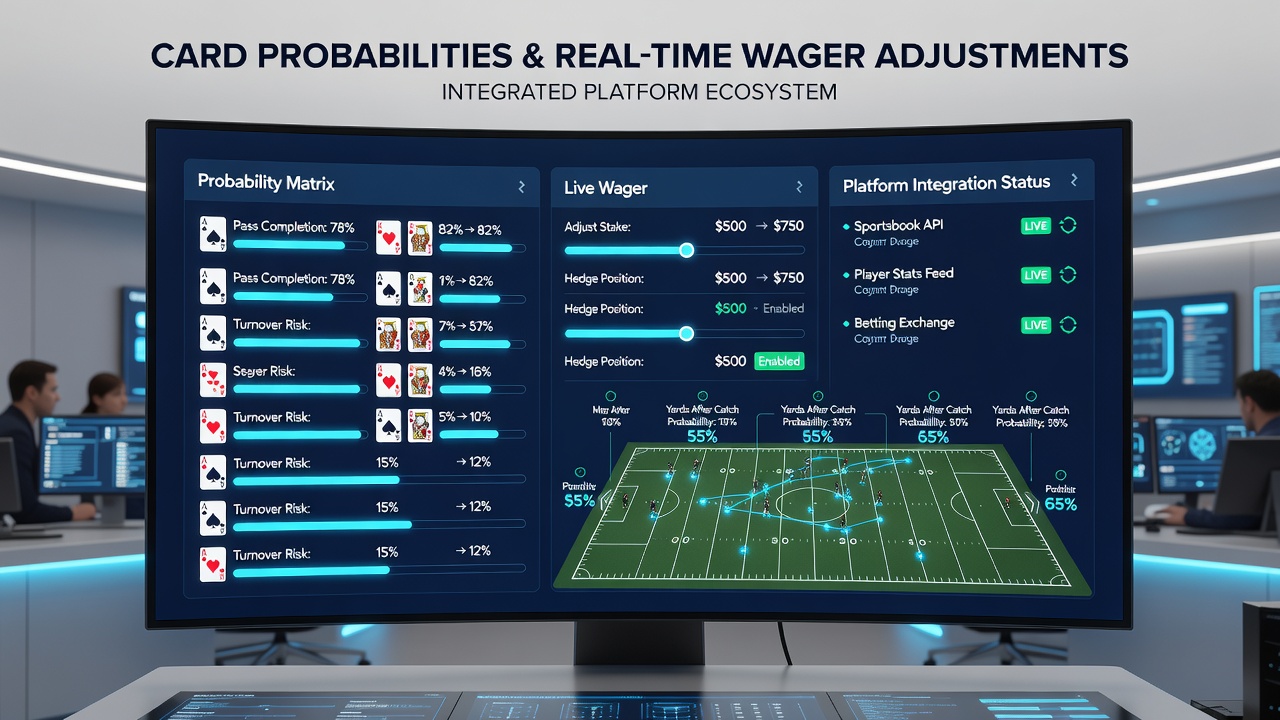
Platforms achieve synchronization by maintaining a central probability engine that pushes updates to every connected endpoint, including retail betting terminals, online accounts, and third-party aggregator sites. This architecture prevents discrepancies that could arise if separate systems calculated card likelihoods independently. In August 2026 several major operators expanded their API partnerships to include additional European and South American leagues, extending the same card-driven adjustment logic to a broader range of fixtures.
Data Sources and Model Validation
Validation studies compare model outputs against actual card distributions recorded by leagues and independent statisticians. Accuracy improves when models incorporate granular inputs such as individual player card rates rather than team averages alone. Industry reports from the American Gaming Association indicate that operators testing these refined models observed tighter alignment between predicted and observed card frequencies, particularly in high-stakes matches where referee assignments carry greater weight.
Additional inputs come from academic analyses of disciplinary patterns across different competitions, while regulatory bodies in jurisdictions such as New Jersey require operators to maintain audit trails showing how probability models influence wager pricing. These records allow oversight agencies to verify that adjustments remain within approved parameters and do not introduce unfair advantages.
Integration with Broader Betting Ecosystems
Card probability engines operate alongside other live-data modules that handle goals, corners, and player performance metrics. The combined system produces a unified risk profile for each active wager, enabling risk-management teams to set exposure limits that account for correlated outcomes across multiple markets. When card likelihood rises sharply, the platform may simultaneously tighten lines on related bets such as total bookings or player fouls to maintain balanced liability.
Third-party data providers supply standardized event feeds that feed into these engines, ensuring that platforms using different front-end designs still reference the same underlying probabilities. This standardization supports interoperability between sportsbooks and casino-style offerings that incorporate football-themed card markets.
Conclusion
Card probability models have become a foundational element of real-time football wagering on integrated platforms, supplying the quantitative basis for continuous odds adjustments that reflect evolving match conditions. Through centralized engines, validated data inputs, and synchronized delivery across channels, these systems maintain pricing integrity while supporting expanded market offerings. As leagues and technology partners continue to refine data granularity, the precision of card-driven wager modifications is expected to increase further in coming seasons.